
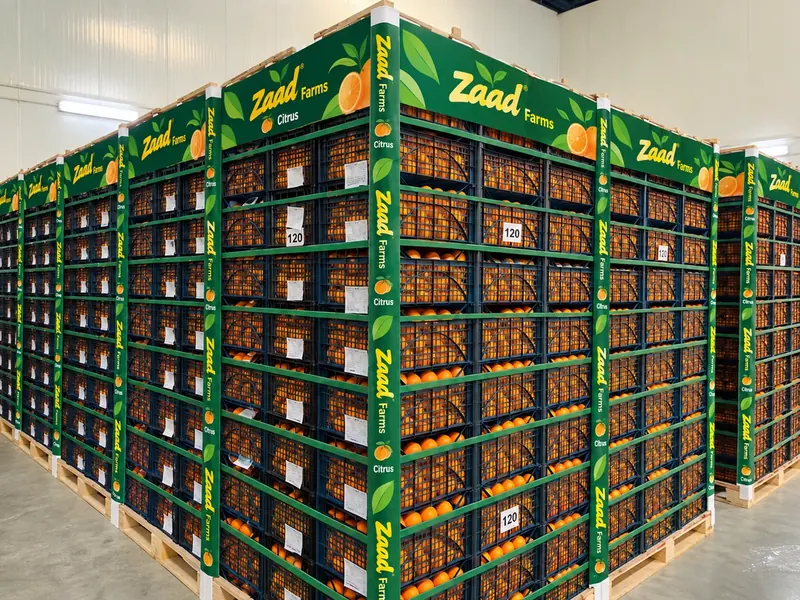
Egypt is one of the world’s largest exporters of fresh fruit and vegetables. Citrus, potatoes, onions, grapes, strawberries and sweet potatoes from Egypt reach Europe, the Gulf, Russia and Asia every season. For an importer, the opportunity is clear: long seasons, competitive costs and short sea routes. The risk is also clear: a first order that looks cheap on paper can become expensive on arrival if the specification was vague.
This guide walks through the steps we recommend to buyers who are starting or growing an Egyptian programme.
1. Start with a supply brief, not a price list
The most useful first message to any exporter is a short brief. Give every potential supplier the same information so their answers can be compared:
- Product and variety — e.g. Valencia oranges, not just “oranges”.
- Size or count range and grade — e.g. counts 56–72, Class I.
- Pack — carton type, net weight, retail units, label language.
- Volume and frequency — e.g. two 40ft reefers per week from February.
- Destination and Incoterm — port, FOB or CFR/CIF.
- Target shipment window — the weeks you need, not only the month.
With this, an exporter can confirm availability and quote in one reply. Without it, you will receive prices that are impossible to compare.
2. Check who controls the chain
Ask each supplier who controls cultivation, packing, cold storage and export coordination. A supplier that runs its own farms and packhouse can adjust harvest dates, grading and packing when your requirements change. A pure trader depends on others to do the same. Neither model is wrong, but you should know who will fix a problem if one occurs.
Request current documents in the correct company and site names, and check the scope and validity of any certificate you rely on.
3. Match the product to the season
Egyptian seasons are long, but each product has its best window. As a guide: oranges December–May, mandarins November–April, grapes May–October, strawberries December–May, potatoes January–June, onions February–September and sweet potatoes August–March. See our seasonal calendar for the full overview.
Calendars are planning tools, not guarantees. Variety, region and weather can move the commercial window by weeks, so always reconfirm availability against your requested shipment week.
4. Write the commercial specification
Before comparing prices, agree a written specification that both sides sign off. A good specification covers:
| Item | Example |
|---|---|
| Variety | Murcott mandarins |
| Size / count | Counts 42–54 |
| Grade & tolerances | Class I; max 5% minor skin defects |
| Pack | 8 kg printed carton, 1 layer paper |
| Label | Buyer brand, EN/DE, EAN barcode |
| Pallet | Euro pallet, 120 cartons, corner boards |
| Temperature | Set-point agreed per product |
| Evidence | Lot photos, loading photos, temperature recorder |
Approval should cover both the product and its final pack, so repeat orders can be compared on the same basis.
5. Separate product price from services
A quotation usually combines several elements: the product, packing materials, printing, pre-cooling, inland transport, freight and insurance. Ask the exporter to separate them. It makes offers comparable and shows where a lower price really comes from — sometimes it is a lighter carton or a lower net weight rather than a better deal.
6. Check market access and documents early
Access rules depend on the product and the importing country. Your importer or customs broker should confirm current requirements with the relevant authority before the first shipment. Typical documents include the commercial invoice, packing list, bill of lading, certificate of origin and phytosanitary certificate; some markets need more. Read our guide to MRLs and phytosanitary documents.
7. Plan the cold chain
Each product has its own carrying temperature and humidity. Citrus, grapes, sweet potatoes and frozen products cannot all travel at the same setting. Agree the set-point, ventilation and pre-cooling in the specification. Our cold-chain guide lists typical settings.
8. Start with a trial, measured properly
A trial order should use written acceptance criteria, so both parties learn from the same evidence. Record arrival temperature, photos, weights and defects against the specification. Share the results with the exporter and adjust the specification before scaling up.
The best Egyptian programmes are built over seasons: a clear brief, a written specification, honest availability and evidence on every shipment.
Next step
Send us your brief — product, size, pack, volume, destination and shipment window — and our export team will reply with availability and a quotation within 24–48 business hours.
Frequently asked questions
What is the minimum order when importing from Egypt?
For most fresh products it is one full 20ft or 40ft reefer. Mixed loads of compatible products and air-freight trials are possible.
How long does shipping from Egypt take?
Roughly one to two weeks to North European ports, around a week to Black Sea ports and three to five weeks to East Asia, depending on the route and carrier.
Which Incoterms are common for Egyptian produce?
FOB and CFR/CIF are the most common. The right choice depends on who controls freight booking and insurance.